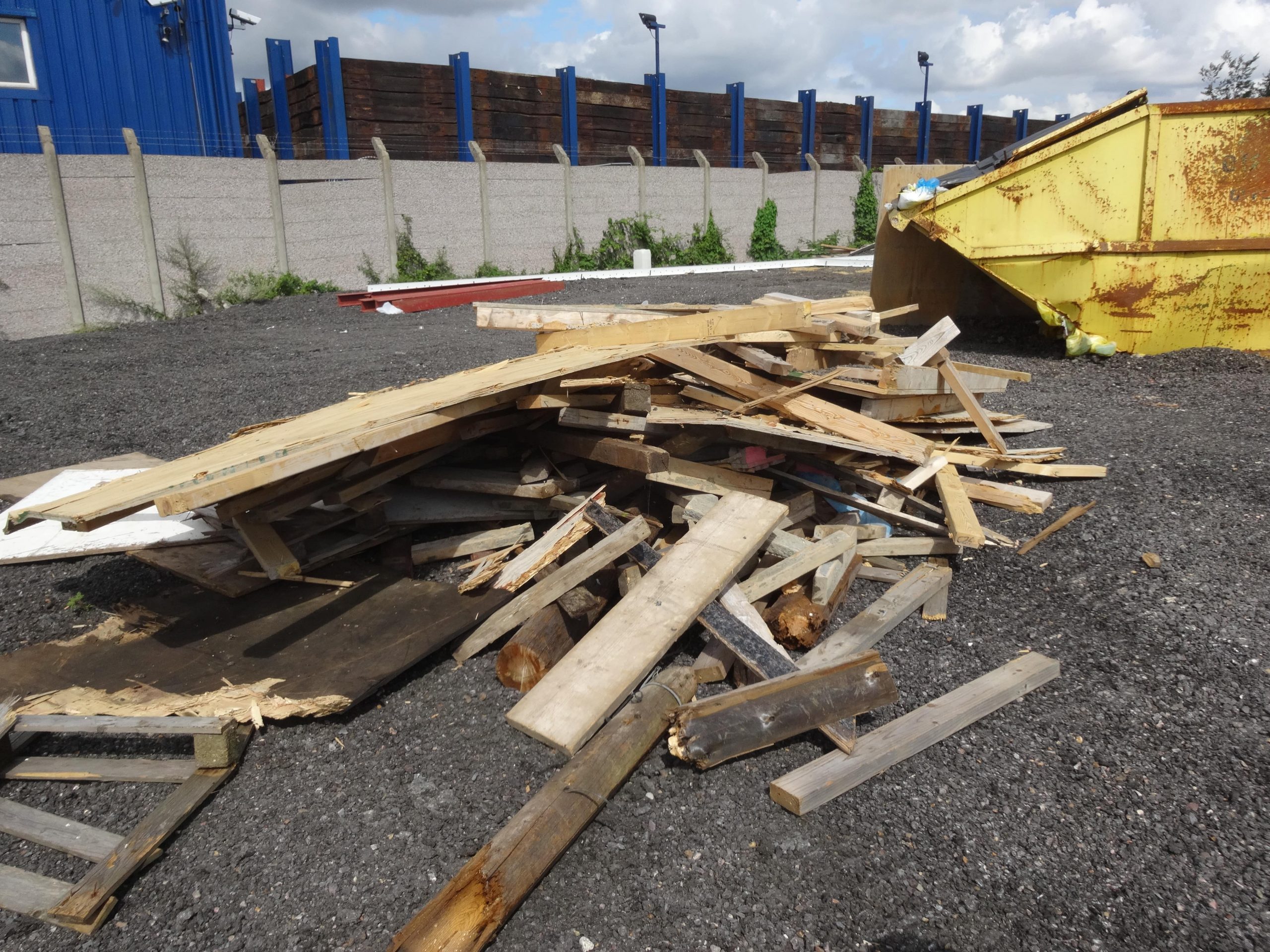
Following a number of high profile industry fires, the Environment Agency have been reassessing potential risks associated with sites containing and accepting combustible waste. Any site currently operating under an Environmental Permit that contains or receives combustible waste, is now required to submit a Fire Prevention Plan. The plan, required for all new and existing sites, must comply with the Environment Agency’s guidance Fire Prevention Plans, published in March 2015.
The Environment Agency have also published new standard rules covering all sites receiving combustible waste. Examples of this include SR2015 No7 Household, Commercial and Industrial Waste Transfer Station with Treatment (no building) and SR2015 No23 Treatment of Waste Wood for Recovery. All sites that currently operate under an existing standard rules and receive combustible waste will now be required to upgrade to a bespoke permit if the conditions of the new standard rules or the Fire Prevention Plan criteria cannot be met. The Environment Agency have also set a tight deadline of just three months to comply.
Following a review of the recently published standard rules it is clear to see that the new conditions are likely to impact many existing sites. The new conditions:
It is still not entirely clear how the Environment Agency will enforce and approve the new rules, which could potentially impact a significant number of sites, in such a short period of time. Following initial liaison with the Environment Agency, it is understood that the local officers will be responsible for answering all initial queries.
At Lustre Consulting, we have gained extensive experience in preparing bespoke permit applications, including supporting technical assessments. We always advise early consultation with the Environment Agency to ensure that the regulatory requirements are understood from the outset. Should you require assistance with initial enquiries, bespoke permit or variation applications and / or the technical requirements, please do not hesitate to contact us.
You can find further information using the links below:
Standard Rules SR2015 No.23: https://www.gov.uk/government/publications/sr2015-no23-treatment-of-waste-wood-for-recovery
Standard Rules SR2015 No.7: https://www.gov.uk/government/publications/sr2015-no7-household-commercial-and-industrial-waste-transfer-station-with-treatment-no-building
Fire Prevention Plan Guidance: https://www.gov.uk/government/uploads/system/uploads/attachment_data/file/415262/LIT_10105.pdf
What is a Noise Assessment? A Noise Assessment will determine whether any prevailing noise sources could be affecting your site or whether any adverse noise sources could be introduced, and if those noise sources could have an adverse impact on future site users, or off-site noise sensitive receptors. If the Noise Assessment finds that the […]
What is a Noise...
What is a Flood Risk Assessment? A Flood Risk Assessment (FRA) will determine the flood risk to a site from multiple sources. It is usual for a FRA to assess the flood risk from rivers, sea, surface water, sewers or groundwater. The level of risk is in part determined by future site users and/or sensitive […]
What is a Flood Risk...
What is an Air Quality Mitigation Statement? An Air Quality Mitigation Statement qualitatively assesses the air quality impact to future site users and/or local receptors and whether any mitigation measures could be required. Why is an Air Quality Mitigation Statement needed for this site? The Institute of Air Quality Management (IAQM) and Environmental Protection UK […]
What is an Air...
What is a Phase 1 Desk Study? A Phase 1 Desk will determine if contamination could be present at your site, and importantly, if that contamination poses a risk to future site users or the environment. Why is a Phase 1 Desk Study needed for this site? If the Desk Study finds that the level […]
What is a Phase 1...