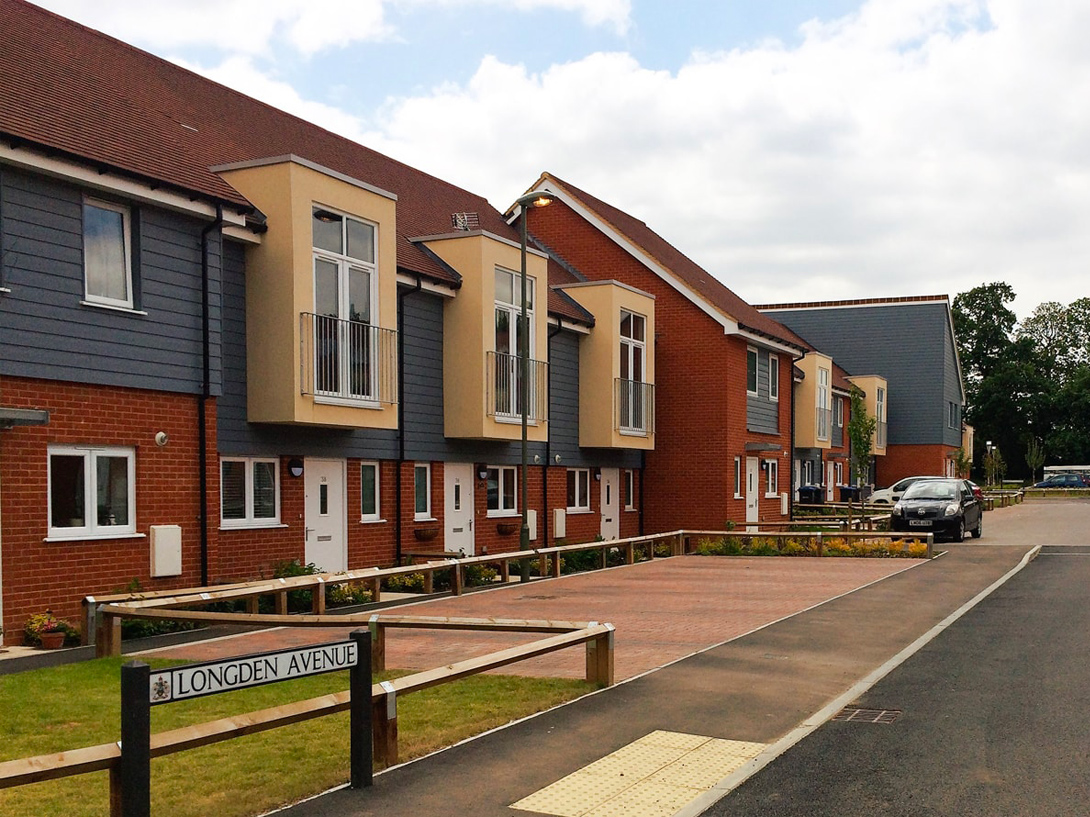
This site was granted planning permission by the Secretary of State for the development of 350 100% affordable low rise houses and apartments.
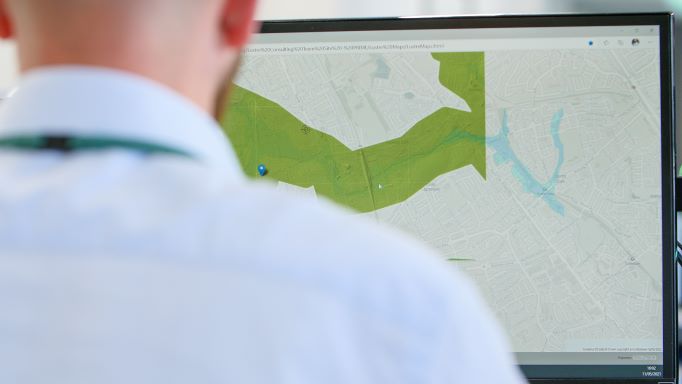
The site comprises approximately 24ha of open space, bisected by a former sand pit and pond. Site investigations undertaken since the 1990s found the pond (1ha in area and up to 4m deep) to be grossly contaminated with high concentrations of hydrocarbons, metals and chlorinated solvents as a result of illegal dumping over many years. A large amount of associated waste car parts, tanks, drums were also recorded during the investigation of the site. The very high contamination concentrations were found to be in the pond silts, with the underlying Bagshot Formation found to be also found to be contaminated several meters below the base of the pond including the deeper groundwater table.
We worked closely with the Landowner, Housing Association and Design & Build Contractor over a period of several years to ensure that the pond was sufficiently remediated and ready for development. The Local Planning Authority were kept informed at key milestones enabling discharge of the planning conditions as the various phases of the development progressed, through initial desk study stage, detailed site investigation and soil testing, and preparation of a Remediation Strategy to enable clean-up. Our work also included a detailed geotechnical appraisal of the site for foundation and infrastructure design. Infiltration testing was carried out across the site to permit surface water drainage design under sustainable urban drainage design requirements.
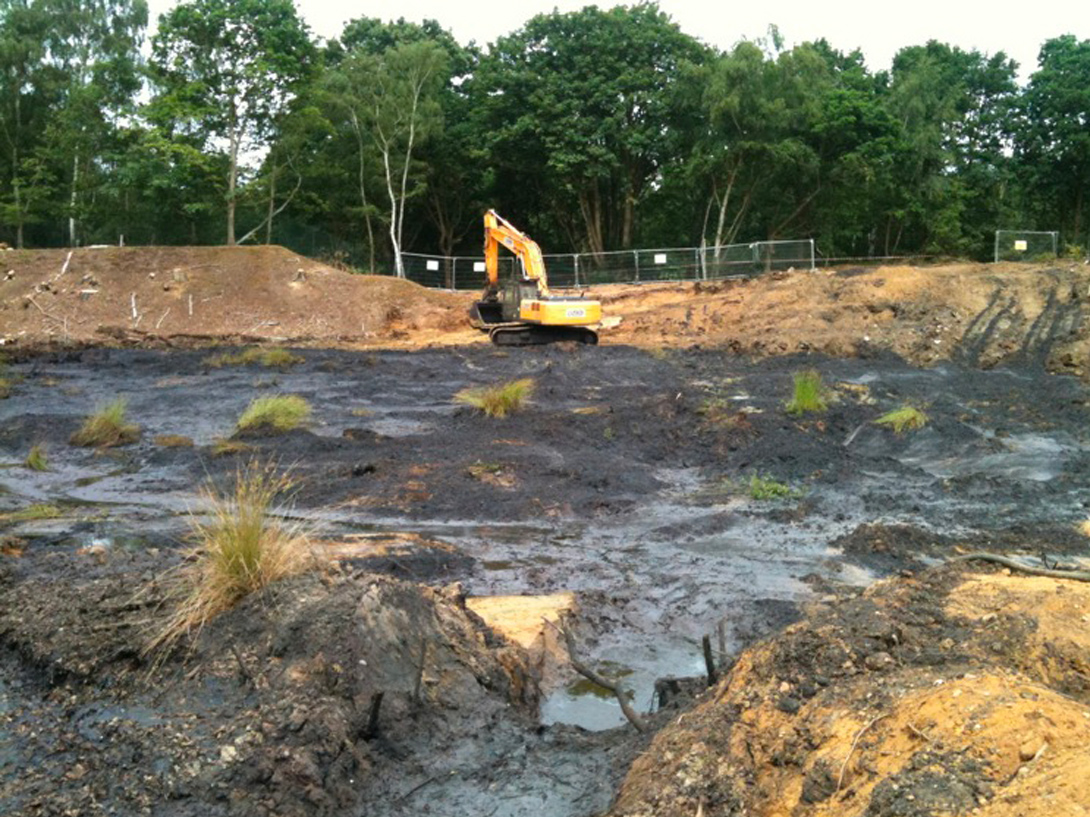
The methods of remediation utilised included pump & treating the contaminated pond water, in-situ bioremediation of the groundwater, removal of waste metals such as drums, tanks, cars and excavation and ex-situ aeration of over 9,000m3 of contaminated soil in biopiles. The soils in the biopiles were reduced to a contamination concentration threshold that enabled reuse and backfilling of soils into the excavated pond reducing the need for costly off-site disposal to landfill. An engineered vapour membrane was installed in those dwellings positioned directly over the former pond to prevent any associated vapour contamination entering the properties.
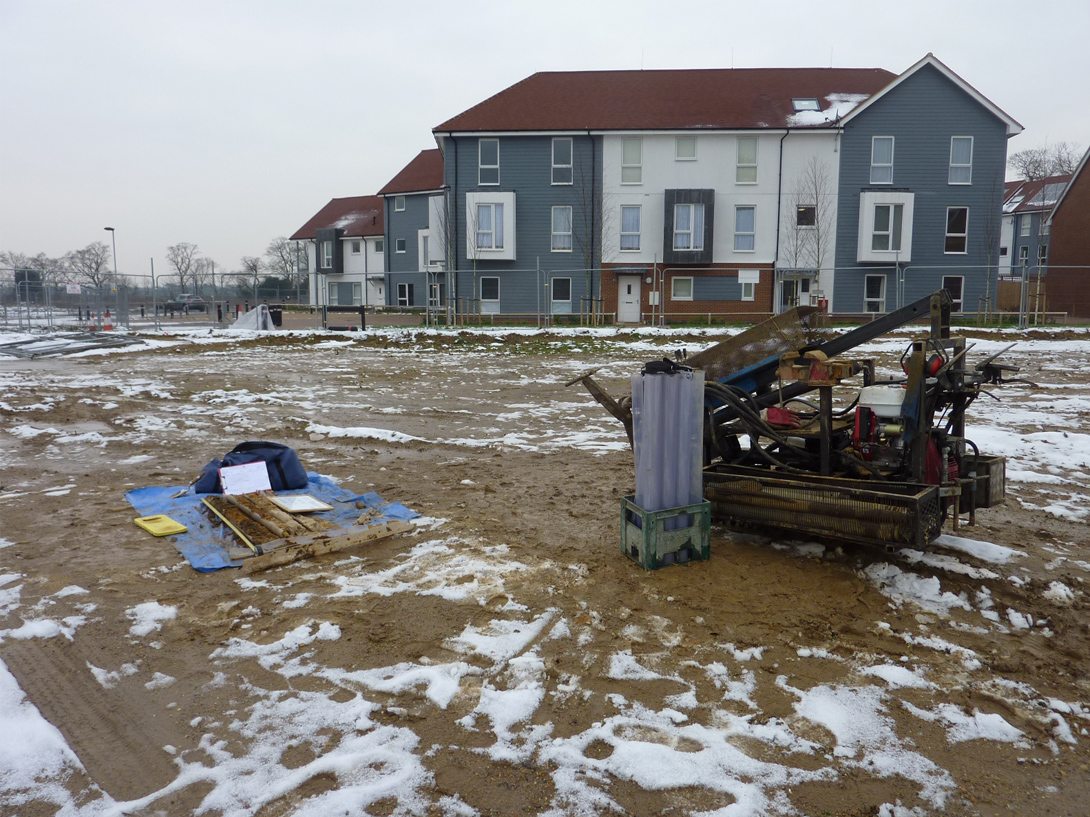
Upon completion, a Remediation Validation Report was prepared by Lustre to provide evidence to the regulatory authorities that the contaminated pond had been remediated. The Validation Report was approved by the regulatory authorities and NHBC in 2015 and the planning conditions successfully discharged by Environmental Health to enable occupation of the new properties.
What is a Noise Assessment? A Noise Assessment will determine whether any prevailing noise sources could be affecting your site or whether any adverse noise sources could be introduced, and if those noise sources could have an adverse impact on future site users, or off-site noise sensitive receptors. If the Noise Assessment finds that the […]
What is a Noise...
What is a Flood Risk Assessment? A Flood Risk Assessment (FRA) will determine the flood risk to a site from multiple sources. It is usual for a FRA to assess the flood risk from rivers, sea, surface water, sewers or groundwater. The level of risk is in part determined by future site users and/or sensitive […]
What is a Flood Risk...
What is an Air Quality Mitigation Statement? An Air Quality Mitigation Statement qualitatively assesses the air quality impact to future site users and/or local receptors and whether any mitigation measures could be required. Why is an Air Quality Mitigation Statement needed for this site? The Institute of Air Quality Management (IAQM) and Environmental Protection UK […]
What is an Air...
What is a Phase 1 Desk Study? A Phase 1 Desk will determine if contamination could be present at your site, and importantly, if that contamination poses a risk to future site users or the environment. Why is a Phase 1 Desk Study needed for this site? If the Desk Study finds that the level […]
What is a Phase 1...